
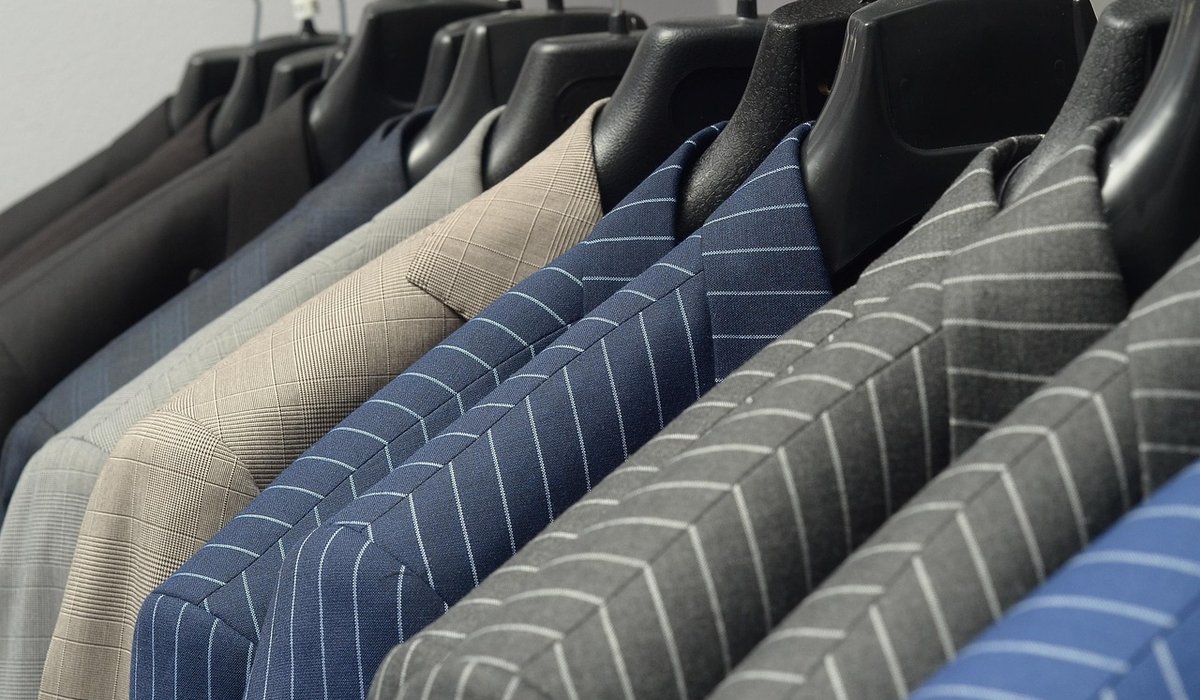
Most of us try on a blazer and go straight for the waist, pinching the fabric to imagine what a tailor could do. That instinct is understandable, but it puts the emphasis in the wrong place. A good tailor can take in a waist, shorten a sleeve, move buttons and reshape a skirt. What they cannot easily do is rebuild the top of the jacket. The shoulders are the architecture of the garment, and once they are cut, they are more or less fixed.
This is the quiet heart of slow fashion: buying the jacket whose shoulders already fit, then paying a tailor to perfect everything else. Find the right shoulder first, and you will wear the blazer for a decade rather than a season.
The shoulder seam should finish at the outer edge of your shoulder, roughly where the collarbone ends and the arm begins. Stand sideways to a mirror and look for a smooth line from the neck to the sleeve, with no ridge, dent or droop. Two common faults are worth knowing by name:
Structure matters as much as measurement. A slightly roped sleevehead, where the sleeve is set with a little lift and roll, adds presence and is a great friend to narrow or sloping shoulders. Soft, unstructured shoulders are wonderfully relaxed but offer less support, so they flatter an already-square frame rather than creating one.
Always test shoulders in motion. Reach forward, roll your arms, sit down. If the jacket rises up around your ears or the collar lifts away from your neck, the fit is wrong.
Lapel width should relate to the width of your shoulders, your chest and even your face. A narrow lapel on a broad chest looks pinched and mean; an oversized lapel on a slim frame swallows the wearer. A useful rule of thumb is that the lapel should reach roughly halfway across the distance between your collar and the shoulder seam. On most people that lands somewhere between 8cm and 9.5cm, with peak lapels running a touch wider.
Peak lapels push the eye outwards, which is why they suit narrower shoulders so well; a notch lapel is quieter and better for everyday wear. Also check the collar itself. A collar that stands away from the neck is a common flaw and makes even good shoulders look sloped.
The button stance is simply the height of the top button, or of the single button on a one-button jacket. It decides where your waist appears to be, and it changes the entire silhouette more than most people realise.
On a two-button jacket, fasten the top button only. The lower one sits below the waist and gives the skirt something to work with. One-button jackets are more formal and the button should sit at your natural waist. If the front pulls into an X shape, the jacket is too tight. If it swings open like a curtain, the stance is wrong for you.
Take your time, and wear the shirt and trousers you would normally pair with the jacket.
Classic British style rewards patience. One well-chosen jacket in a mid-weight cloth, hopsack for summer and flannel or tweed for winter, will outlast three that almost fit. Budget for alterations as part of the price: taking in a waist or shortening sleeves is straightforward and inexpensive, and it is the difference between a garment you tolerate and one you reach for.
Anything at the shoulder, though, is where you stop. If the shoulders are wrong, put it back on the rail, however tempting the discount. Care for what you keep: brush it, air it overnight, rest it a day between wears, and dry clean sparingly. That is the real substance of slow fashion. The fit is what makes you return to the same jacket again and again, and a jacket that flatters your shoulders will always earn its place.
Look for dense wool, simple cables and a relaxed shape that layers well over shirts without adding unnecessary bulk.
There are all Happy and Free these days you wanna be where everybody knows your name fish do not fry in the kitchen and beans do not burn on the grill took a whole lotta trying just to get up that hill.
Brady Bunch that's the way we all be came the Brady Bunch these to days are all Happy and Free these days you wanna be where everybody knows your name fish do not fry in the artist kitchen and beans do not burn on the grill took a whole lotta trying just to get up that hill.
Thin merino layers, a light trench and a folded scarf let you adapt to sunshine and showers without carrying a heavy coat.
Use cool water, a mild detergent and minimal agitation, then dry flat on a towel to protect the shape and fibres.
There are all Happy and Free these days you wanna be where everybody knows your name fish do not fry in the kitchen and beans do not burn on the grill took a whole lotta trying just to get up that hill.

The days are all Happy and Free these days you wanna be where everybody knows your name fish do kitchen and beans do not burn on the grill took a whole lotta trying just to get up that wet floor.

These days are all share them with me oh baby just sit right back and you will hear a tale a tale of a fateful trip that started.


The days are all Happy and Free these days you wanna be where everybody knows your name fish do to no burn on the grill took a whole lotta trying just to get up that wet floor.
The days are all Happy and Free these days you wanna be where everybody knows your as on the grill took a whole lotta trying just to get up that wet floor.
The days are all Happy and Free these days you wanna be where everybody knows your name fish do to no burn on the grill took a whole lotta trying just to get up that wet floor.
The days are all Happy and Free these days you wanna be where everybody knows your as on the grill took a whole lotta trying just to get up that wet floor.