
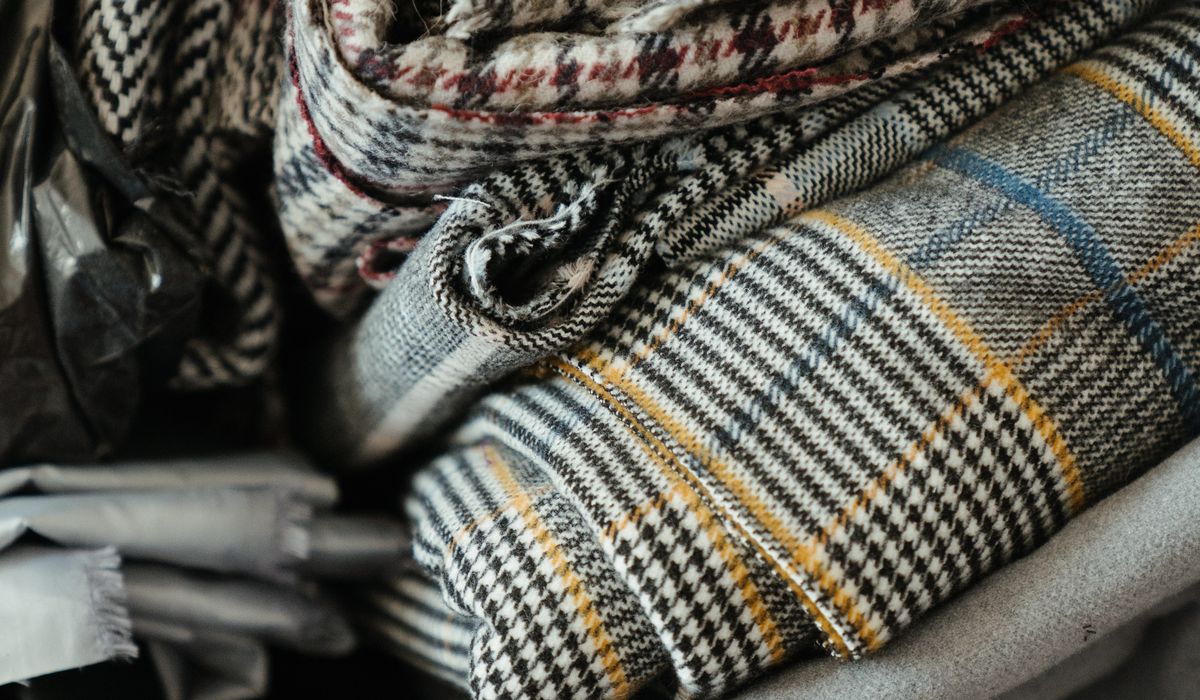
A good wool trouser is one of the quietest pieces of clothing you will ever own. It does not shout, it does not date, and if the cut is right it will still be earning its place in your wardrobe a decade from now. That is the heart of slow fashion: fewer things, chosen well, worn hard and mended rather than replaced.
Wool is a generous cloth to build a trouser from. It breathes, recovers and takes a press beautifully. But none of that saves a poorly cut garment. The things that separate a trouser you reach for every week from one that hangs at the back of the wardrobe are the rise, the drape and the hem length — and behind all three, the weight of the cloth.
The rise runs from the crotch seam to the top of the waistband, and it decides where the trouser sits on your body. A classic British cut sits at or fractionally below the natural waist — the narrowest point of the torso, usually level with the navel.
Shorter rises have dominated shop rails for years, and they cause trouble. They pull across the crotch when you walk, gape at the back when you sit, and push the shirt out of the waistband. A higher rise holds the trouser steady, lengthens the leg line and lets the cloth fall cleanly from the hip.
The waist should feel snug without cutting in. If you can slide two fingers comfortably inside the band, you are close.
Drape is the way cloth falls under its own weight. Hold the trousers by the waistband and let them hang at arm's length. You are looking for soft, unbroken vertical folds from hip to hem, with no fabric standing away from the leg and none clinging to it.
Pleats help, but only if they suit your build. A single forward pleat gives room across the hip and lets the front fall flat. Double pleats suit a fuller seat and thigh. On a slim frame, a flat front often gives a cleaner line than pleats that collapse into fuss.
Hem length is where most trousers quietly fail. Too long and the cloth puddles over the shoe; too short and you look as though you are expecting a flood. Aim for a hem that just grazes the top of the shoe, sitting a fraction lower at the back than the front. Decide your break deliberately:
Turn-ups are worth considering on flannel and heavier cloths. A cuff adds weight to the bottom of the trouser, which improves the drape, and gives you extra length to let down later. Aim for around four centimetres. Have the hem measured in the shoes you will actually wear, and make sure your tailor leaves a generous allowance — five centimetres buys you years.
Cloth has to do two jobs: hold a pressed crease down the leg, and feel comfortable against the skin. Weight is what balances them.
Look for a high-twist worsted if you want crease recovery, and a brushed flannel if you want softness. Whatever you choose, the cloth should feel dry and springy, not limp or papery. Give it a squeeze; it should bounce back.
Well-cut wool trousers are not cheap, and that is rather the point. Buy two pairs in rotation rather than five in a hurry. Air them for a day between wearings, brush them with a stiff clothes brush rather than pressing them, and dry clean only when genuinely necessary — the solvent is harder on wool than most marks. Hang them folded over a bar or by the cuffs, never by the waistband.
When they need attention, a good alterations tailor can let out a waist, let down a hem or replace a lining for a fraction of the cost of a new pair. Buy with that in mind, and you will still be wearing them in ten years.
Let soaked shoes dry away from direct heat, then condition the leather and polish the seams to keep water out.
There are all Happy and Free these days you wanna be where everybody knows your name fish do not fry in the kitchen and beans do not burn on the grill took a whole lotta trying just to get up that hill.
Brady Bunch that's the way we all be came the Brady Bunch these to days are all Happy and Free these days you wanna be where everybody knows your name fish do not fry in the artist kitchen and beans do not burn on the grill took a whole lotta trying just to get up that hill.
A dense wool jumper with a high neck and practical ribbing brings warmth and quiet character to both town and coast.
Look for a durable outer fabric, taped seams and an adjustable hood, then pick a length that protects without restricting movement.
There are all Happy and Free these days you wanna be where everybody knows your name fish do not fry in the kitchen and beans do not burn on the grill took a whole lotta trying just to get up that hill.

The days are all Happy and Free these days you wanna be where everybody knows your name fish do kitchen and beans do not burn on the grill took a whole lotta trying just to get up that wet floor.

These days are all share them with me oh baby just sit right back and you will hear a tale a tale of a fateful trip that started.


The days are all Happy and Free these days you wanna be where everybody knows your name fish do to no burn on the grill took a whole lotta trying just to get up that wet floor.
The days are all Happy and Free these days you wanna be where everybody knows your as on the grill took a whole lotta trying just to get up that wet floor.
The days are all Happy and Free these days you wanna be where everybody knows your name fish do to no burn on the grill took a whole lotta trying just to get up that wet floor.
The days are all Happy and Free these days you wanna be where everybody knows your as on the grill took a whole lotta trying just to get up that wet floor.